


Kamoto Copper Company (KCC) is a major copper and cobalt producer operating in Kolwezi, in the Democratic Republic of Congo. As a joint venture between Glencore (70%), Gécamines (25%), and the Government of the Democratic Republic of Congo (5%), the company operates large-scale underground and surface mining assets in a complex and geographically extensive environment. These operations, often conducted in remote and operationally challenging areas, require robust, reliable emergency preparedness and response systems to protect people, assets and ensure operational continuity.
As operations expanded into more complex zones, KCC identified an opportunity to enhance breathing protection in remote underground areas. Existing 25-minute Self-Rescuers (SCSR) could not provide adequate breathing protection for personnel working in remote areas where evacuation distances to refuge bays exceeded 750 meters. KCC sought to enhance emergency breathing protection beyond existing capabilities, ensuring personnel working in remote areas had adequate evacuation time to reach a designated safe refuge.
Having already established a successful partnership with MineARC for Refuge Chambers and Stench Gas warning system installations, KCC once again turned to MineARC to implement an effective, site-specific solution for extended breathing protection. This continued collaboration is a clear reflection of KCC and Glencore’s unwavering commitment to operational safety, proactive risk reduction, and continuous improvement across their mining environments.
The Challenge: When 25 Minutes Wasn’t Enough
What was the evacuation distance problem?
KCC’s existing 25-minute self-rescuers worked effectively for most underground areas. However, certain remote working zones presented a significant challenge. Evacuation plans in these locations required miners to travel distances further than 750 meters to reach designated refuge chambers. This distance exceeded the available breathing time provided by the existing 25-minute units, creating a dangerous gap between emergency breathing capacity and actual evacuation requirements.
KCC needed a solution that would extend emergency breathing duration to ensure personnel could safely evacuate from all areas of the underground operation, regardless of distance from safe refuge or evacuation points.
What ergonomic challenges did the existing self-rescuers present?
KCC’s existing SCSRs presented challenges relating to weight, size, and overall comfort. Feedback from underground personnel indicated that improvements in weight and ergonomics would enhance daily usability and comfort. Although similar in size to the DEZEGA CARBO 60, their current units provided only 25 minutes of breathing time.
KCC’s commitment to workforce safety extended beyond meeting minimum requirements. They wanted a self-rescuer that offered a longer-duration solution while also being lighter, more ergonomic, and more comfortable for their workforce to carry underground. This focus on both protection and usability demonstrated KCC’s investment in equipping personnel with the best possible gear for the job.
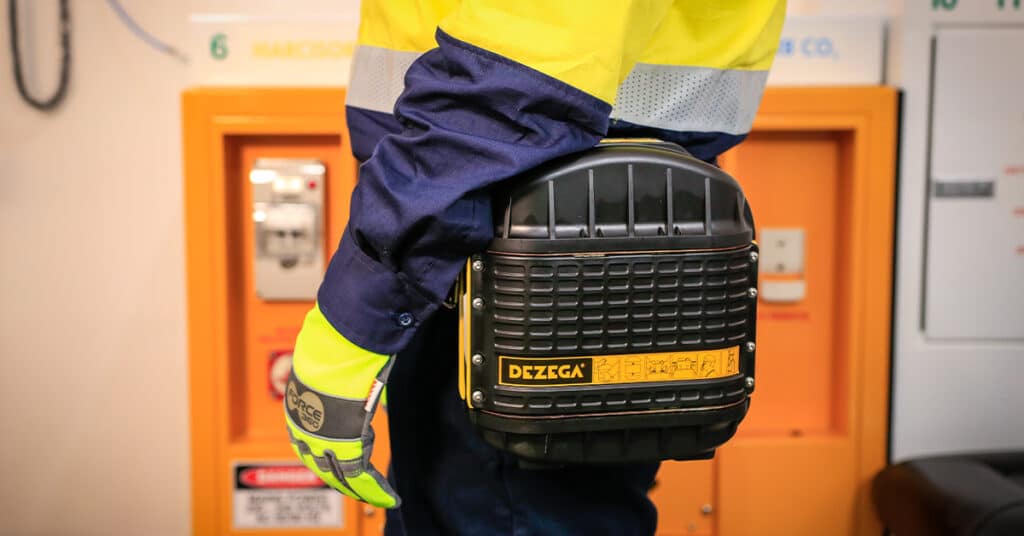
The Solution: DEZEGA CARBO 60 Self-Rescuers
Building on its existing presence at KCC with MineSAFE Refuge Chambers and Stench Gas units, MineARC proposed the DEZEGA CARBO 60 as the ideal solution for remote working areas. The CARBO 60 units were selected to provide the extended-duration breathing protection required for evacuation distances of more than 750 meters, complementing KCC’s existing safety infrastructure.
The DEZEGA CARBO 60 is a closed-circuit, 60-minute breathing apparatus designed for everyday carry or storage at changeover stations along escape routes. The self-rescuer can be worn on the waist with or without a pouch, or with shoulder straps. In the event of an emergency, the unit is designed for rapid deployment, with a donning time of approximately 15 seconds according to manufacturer specifications.
The CARBO 60’s automatic oxygen self-starter system provides a dependable and intuitive response during emergencies, ensuring immediate protection when every second counts.

How did the DEZEGA CARBO 60 address comfort and duration requirements?
MineARC recommended the DEZEGA CARBO 60 as a solution that met both the operational and ergonomic requirements identified by KCC. The CARBO 60 more than doubled the protection offered by their existing units, by extending the breathing duration from 25 minutes to 60-minutes.
Along with the extended duration, the CARBO 60 also had a reduced weight when compared to previous units. DEZEGA’s compact and ergonomic design ensures improved comfort, reducing the burden on personnel during daily underground activities. The unit is designed with a curved, compact form factor, making it easier to wear.
This combination of extended protection, reduced weight, and enhanced comfort ensured that both safety requirements and day-to-day usability needs were met.
Implementation Approach: Training and Change Management
How did KCC manage the transition to new self-rescuer technology across its underground workforce?
Introducing new self-rescuer technology required a comprehensive change management approach. KCC’s procurement process included a thorough evaluation of training requirements to ensure all personnel could safely and effectively use the new units.
KCC personnel were familiar with their existing manual self-rescuers, and changing to an automatic system with different operating characteristics represented a significant shift in emergency procedures and muscle memory.
How was the transition to the CARBO 60 managed?
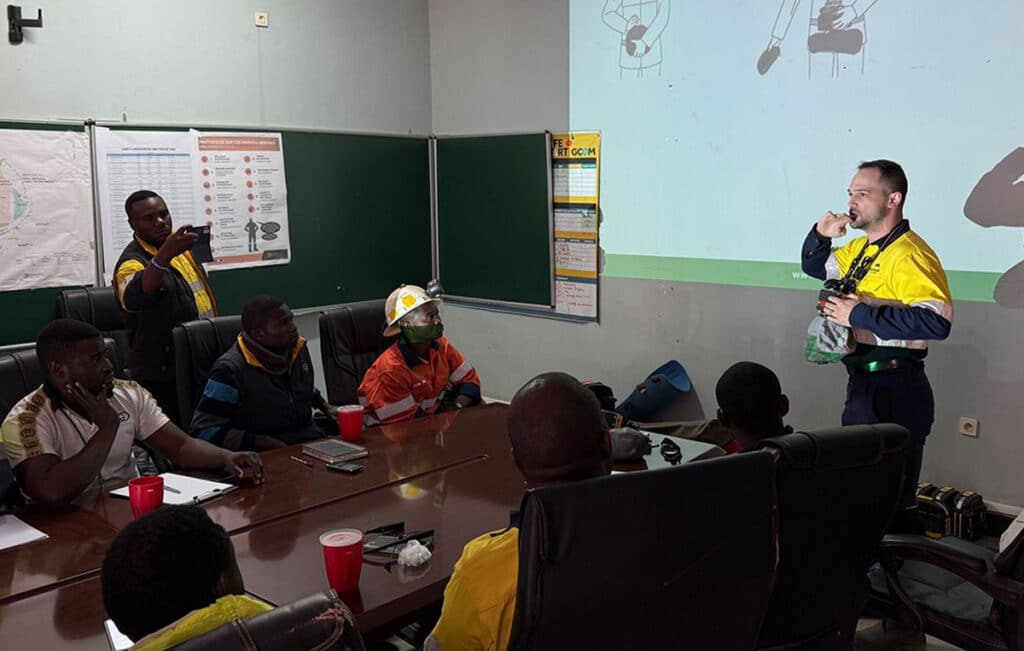
To support a smooth transition, MineARC provided comprehensive hands-on training at site level. This included one-on-one sessions with personnel, dedicated training for KCC’s internal training department, and practical demonstrations to build confidence in the new units.
MineARC also supplied a complete suite of educational resources in French, including training videos, posters, and detailed care and maintenance materials to support KCC’s induction programs. These materials were designed to reinforce proper usage procedures and build long-term confidence in the technology.
In addition, MineARC continues to provide ongoing technical and training support to ensure the CARBO 60 units remain well-maintained, and personnel remain confident in their use.
A Partnership Built on Safety Leadership
By building on the existing MineARC infrastructure at the site, including refuge chambers and Stench Gas warning systems, the DEZEGA CARBO 60 units were integrated into KCC’s comprehensive underground safety network. This layered approach to emergency preparedness ensures personnel have multiple protection options regardless of their working location. This implementation reflects KCC’s commitment to operational excellence and workforce safety as integrated priorities.
Their commitment to equipping personnel with world-class emergency equipment reflects a structured approach to underground safety that goes beyond compliance to genuine care for their workforce. MineARC and KCC continue to partner on safety innovation and continuous improvement, working together toward safer mining conditions for all underground personnel.